1 January 2024
It was going to be a long day, and we would explore Milford Sound in three different ways: by kayak, cruise and nature walk. So we woke up early and drove Miranda over to the visitor center parking lot before we’d even gotten out of our pajamas. This is one of the great things about van life: you can just go.
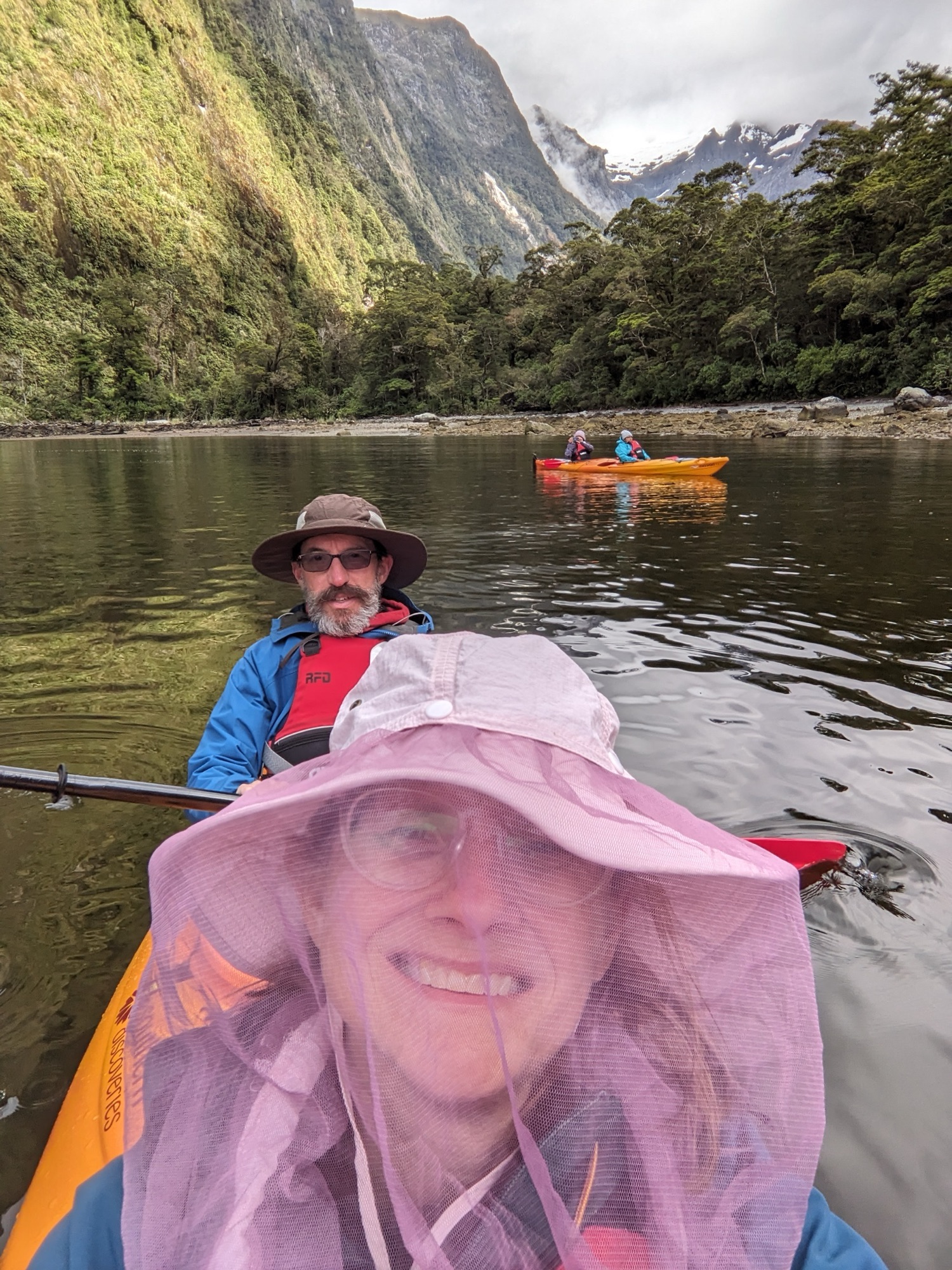
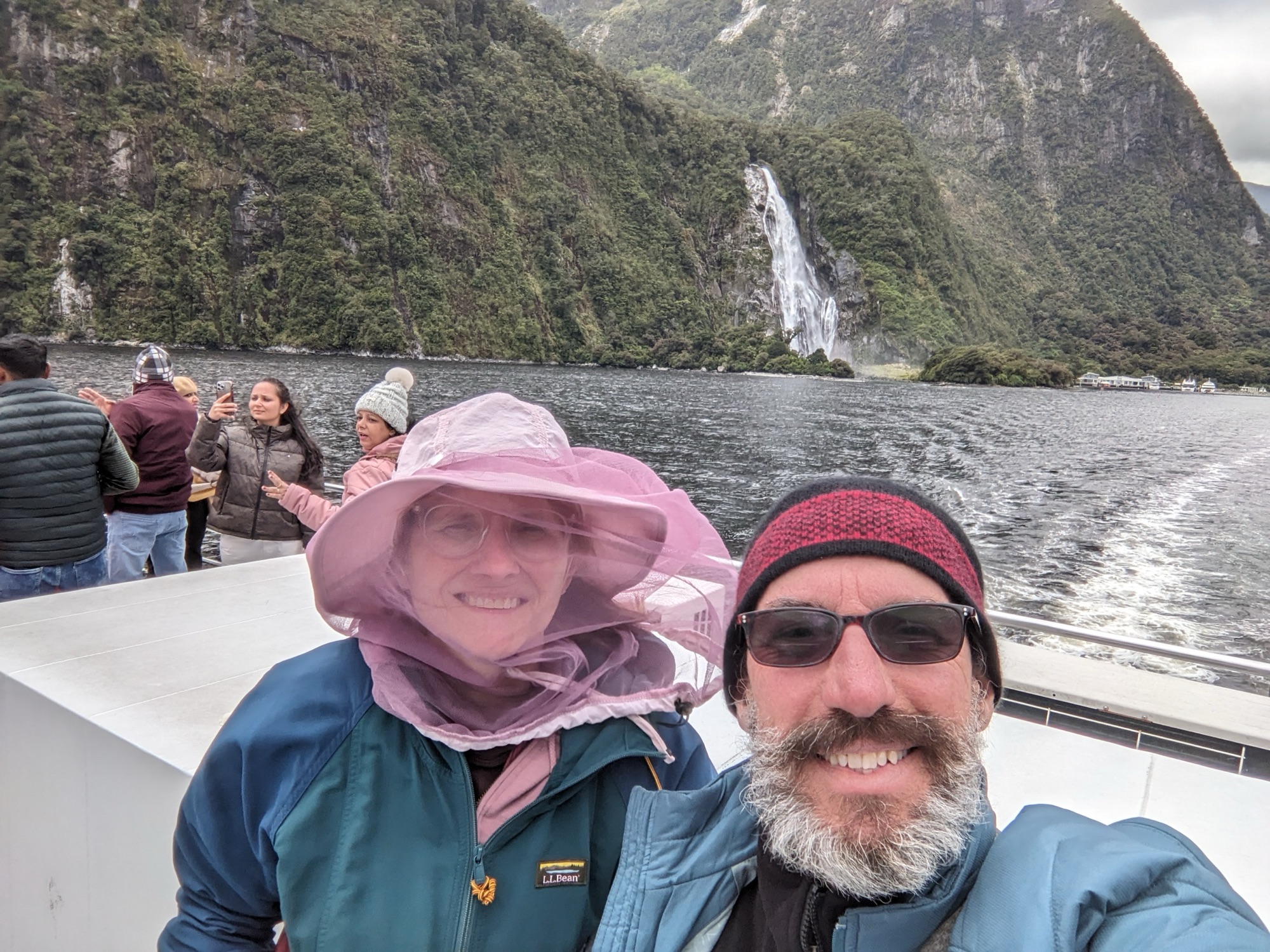
It was chilly as we ate our muesli and layered up. Outside for a solid spraying of insect repellant, to the parking kiosk to pay the ridiculous fee for the day (I sure hope the money is going to protect the nature around here!), and off down the path to the docks (everyone admired my hat!)
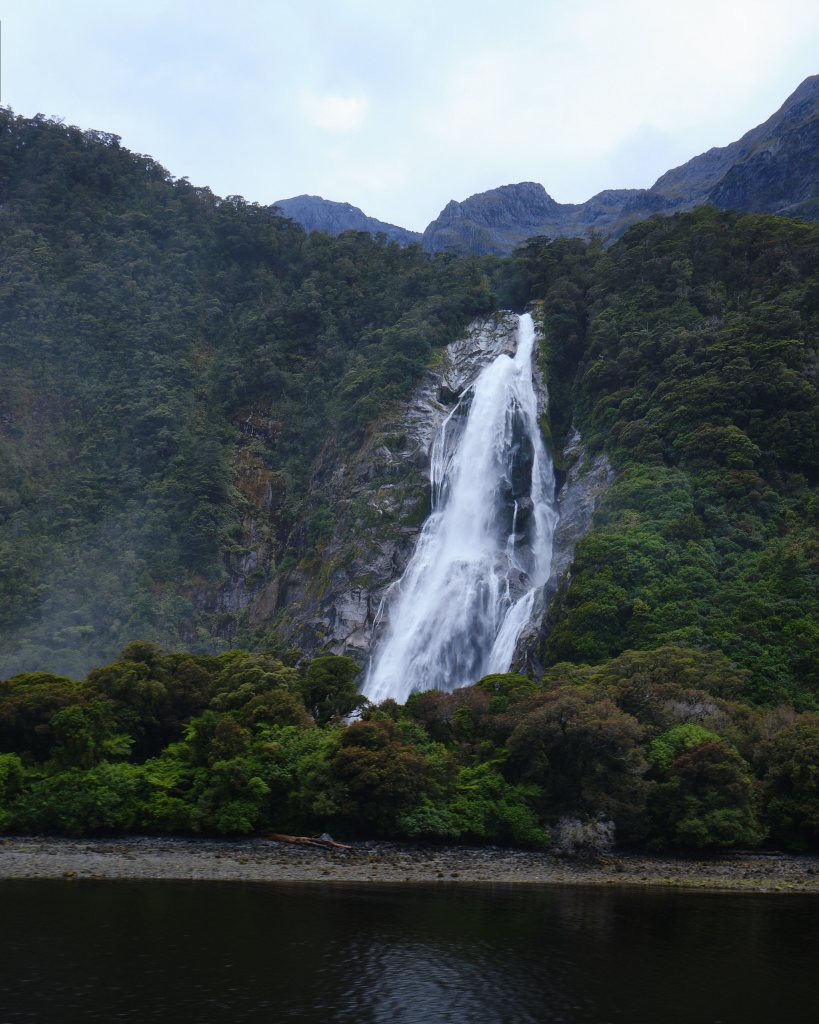
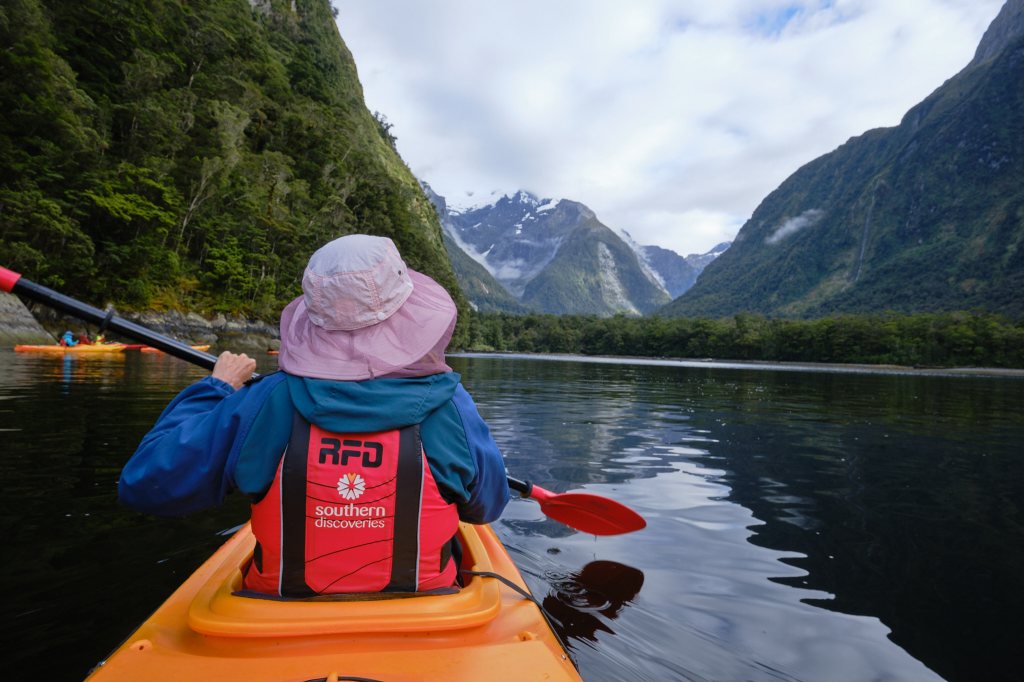
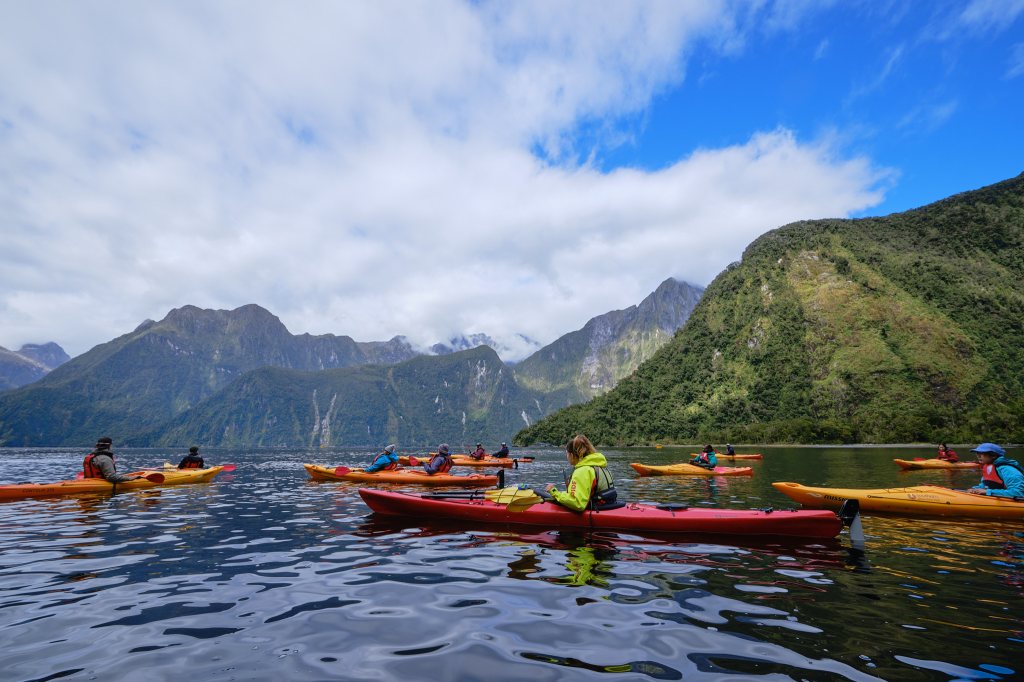
There are a number of companies that offer every kind of experience here. We’d gone with Southern Discoveries who put us on the very first boat, right passed one of the really big water falls and across to their floating exhibit and underwater observatory. An enthusiastic young woman named Kyler would be our guide this morning, Thermal pants and shirts were offered to us (Mike gratefully accepted a shirt), they fitted us with thick, sturdy life jackets and lead us to a special platform. We got into our kayak out of the water. Then, with us still in it, the platform was lowered right into the water and we paddled out.
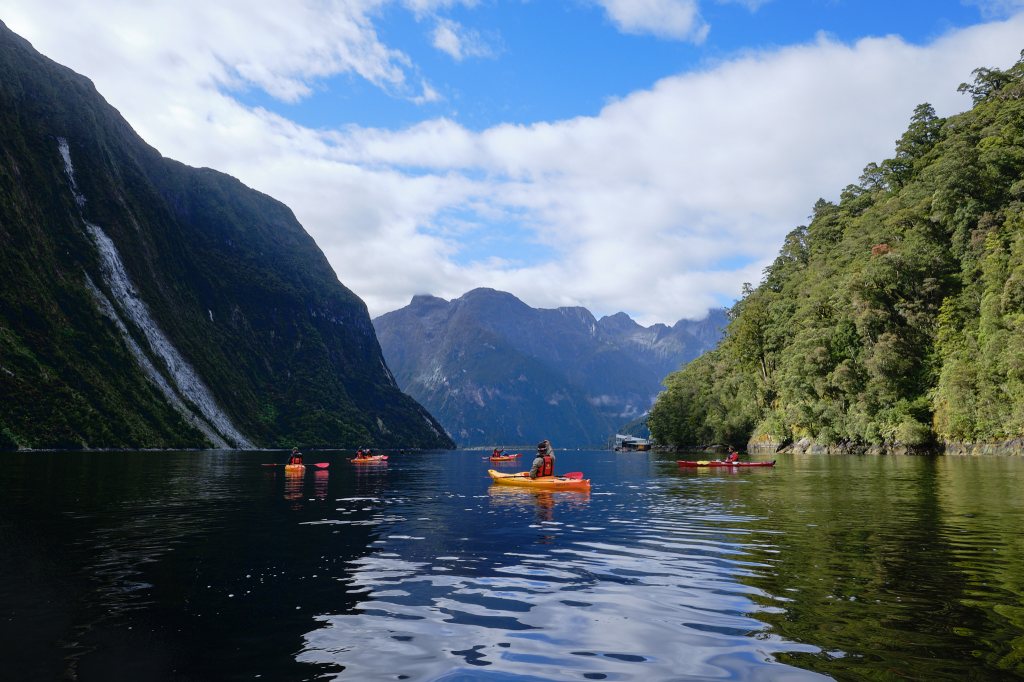
This turned out to be a very different experience than our kayaking in Able Tasman. First off, there were many more people, about 15, mostly families. The area we paddled around was relatively small, and the water extremely calm.
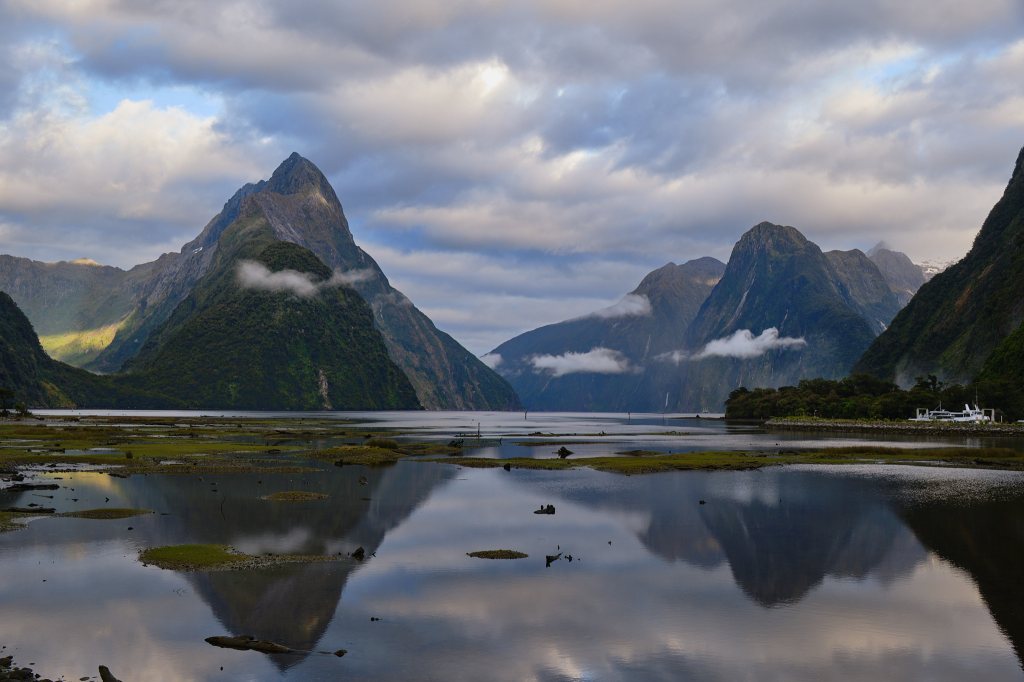
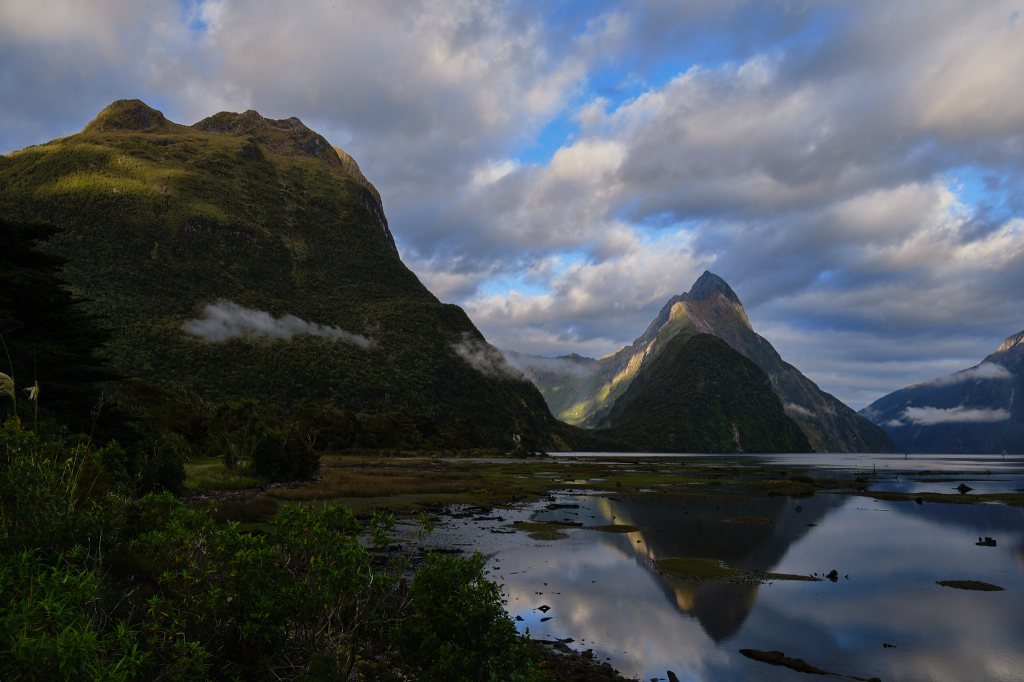
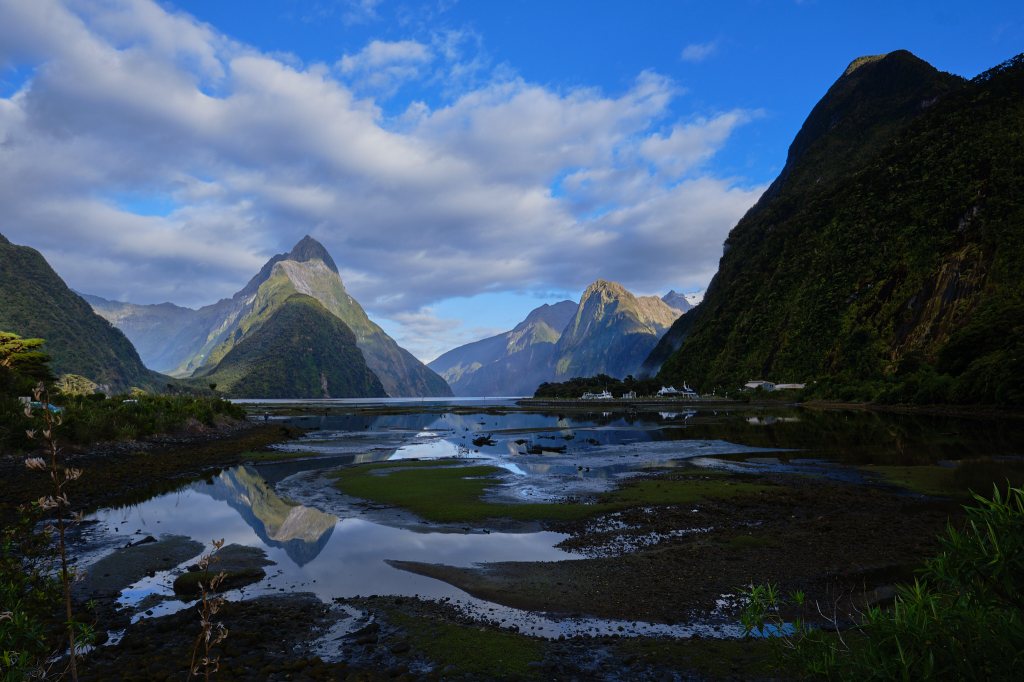
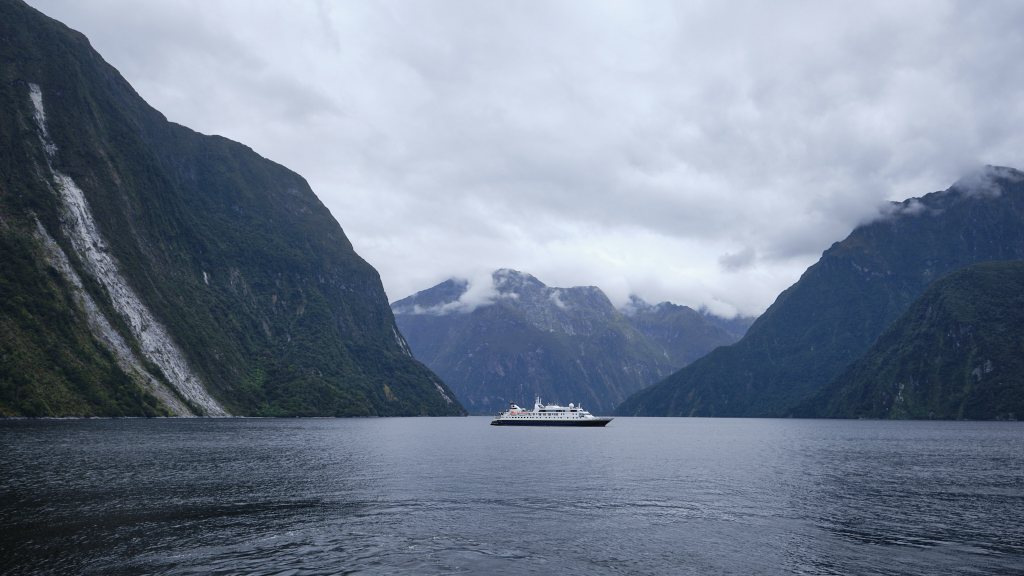
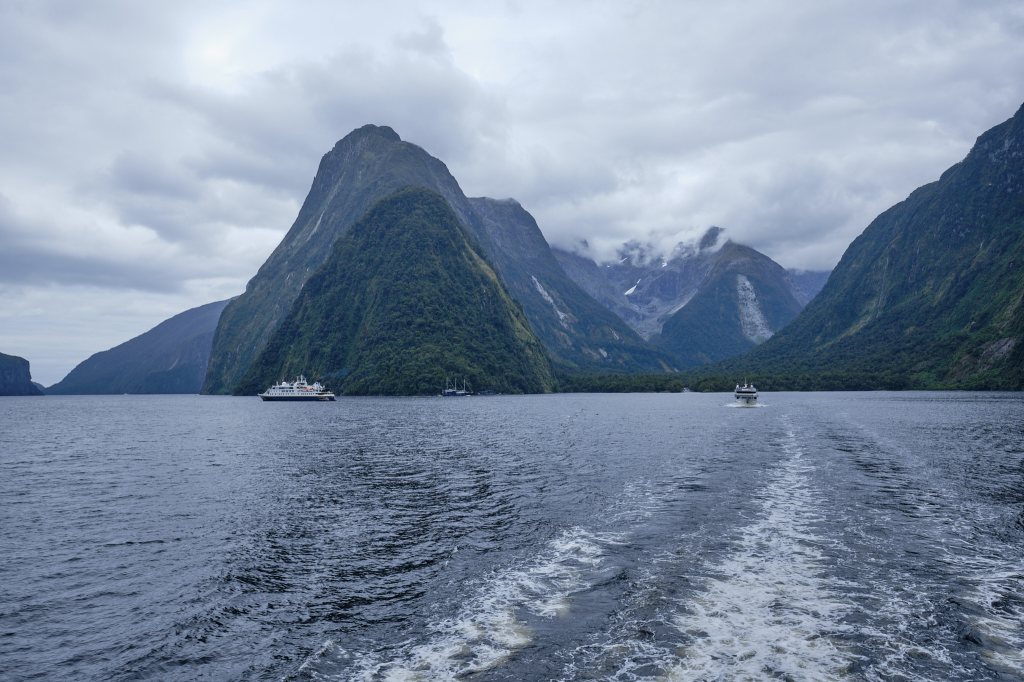
There is much about Milford Sound that makes it a unique place in all the world. The waters and winds are almost always calm. The temperature always cool. And there is lots of rain. It’s one of the wettest places on Earth. It’s also not a “sound” which is shaped by a river, but a fiord, which is shaped by a glacier. Apparently the Welsh seal hunter who gave it this English name didn’t know his geology very well. The Māori call this place Piopiotahi, after the extinct Pio Bird that legend says flew over the god Maui as he died fighting for the immortality of humans.
Away from the cruise ships, touring sea planes and helicopters we paddled quietly to the mouth of a river. Kyler encouraged us to fill our water bottles there, as the guides did. It was cool and tasteless. Lovely. Until that is, we later learned that the Sandflies lay their eggs there. Oh well….I’m still here.
Speaking of the water I asked Kyler why it was so dark. It is rain water, which filters around the plant life and picks up tannins on its way down. There is ten meters of this water floating about the sea water that measures another 250 meters to the bottom. Deeper down, the salt water is aqua blue. This is another feature that makes this place one of a kind.
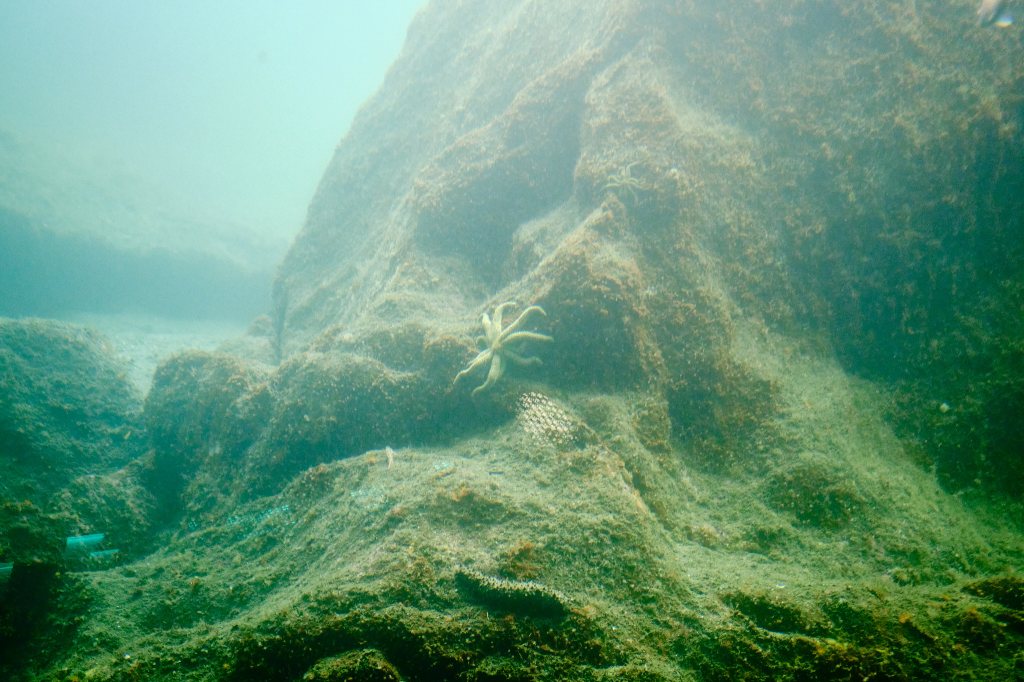
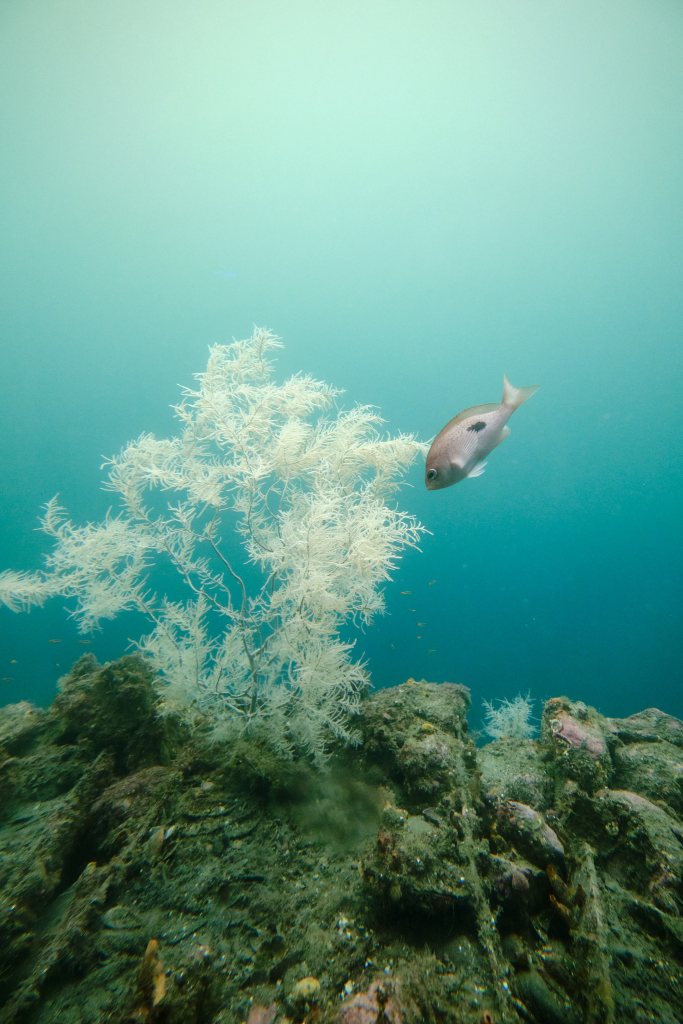
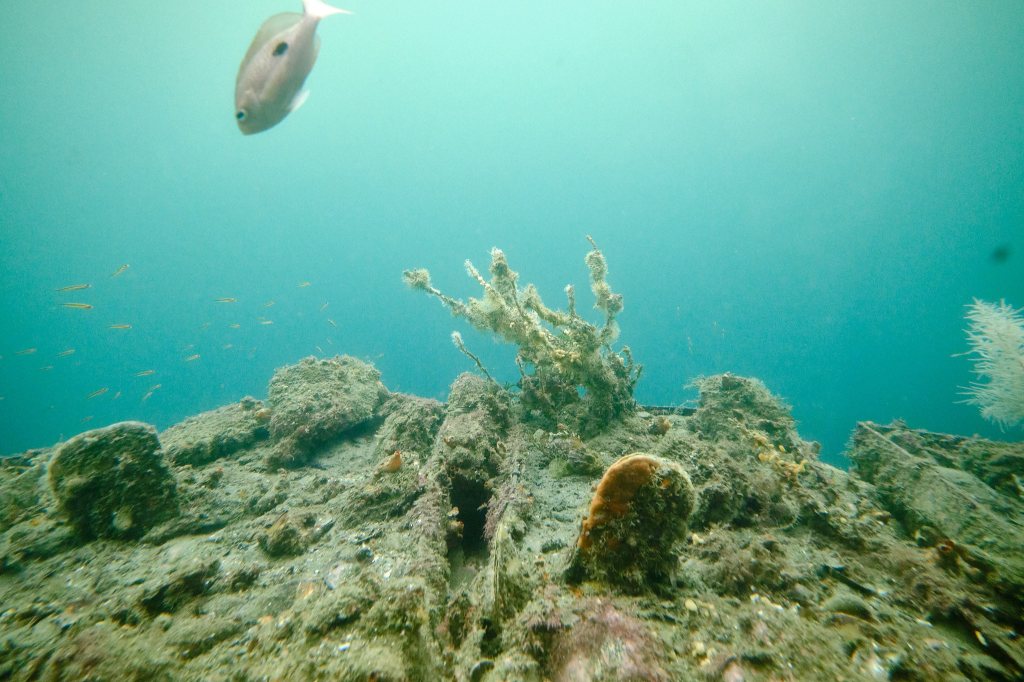
We were to see that water after the kayaking, when we went into an underwater observatory. Attached to the floating platform from which the kayaking began, this large tube goes down below the 10 meter fresh water layer and into the salt water below. A spiral staircase took us to windows where we could observe the habitat far below the surface. We saw fish tiny and large, camouflaged and bright. Huge star fish with 11 legs. Anemones and trees of white called black coral.
A memory came to me. My great grandmother Baumach had a pin made of black coral. She told me that it came from the very deep ocean and that men risked their lives to get it. I was very small when I had admired that pin. Thanks Granny B. It was nice to see you again.
Kyler knew the sea life intimately. She would tell us that a certain fish recently did this or that, point out a fish she hadn’t see for awhile, and show us the trail left by a creature that had just feasted. She was an impressive guide.
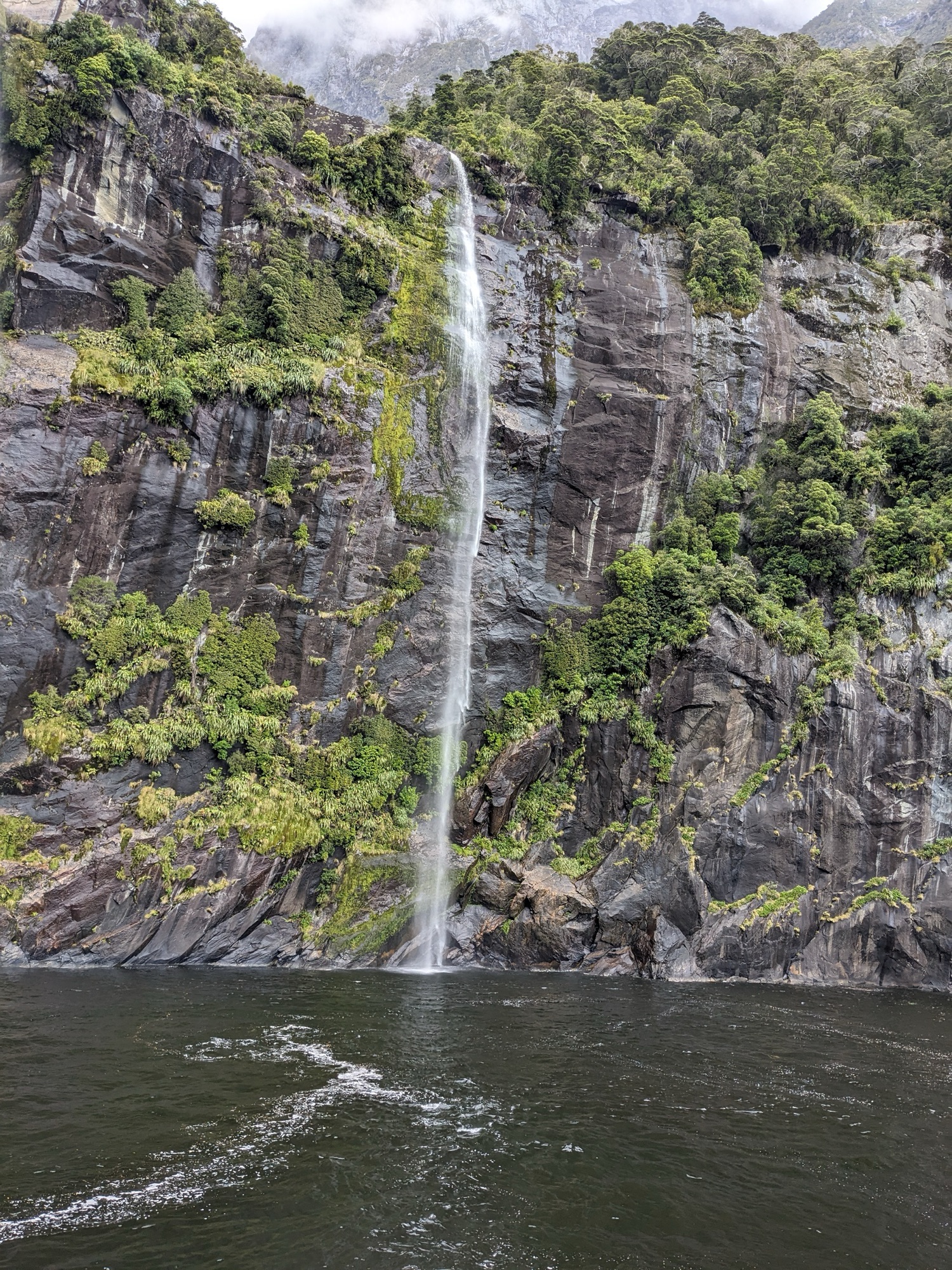
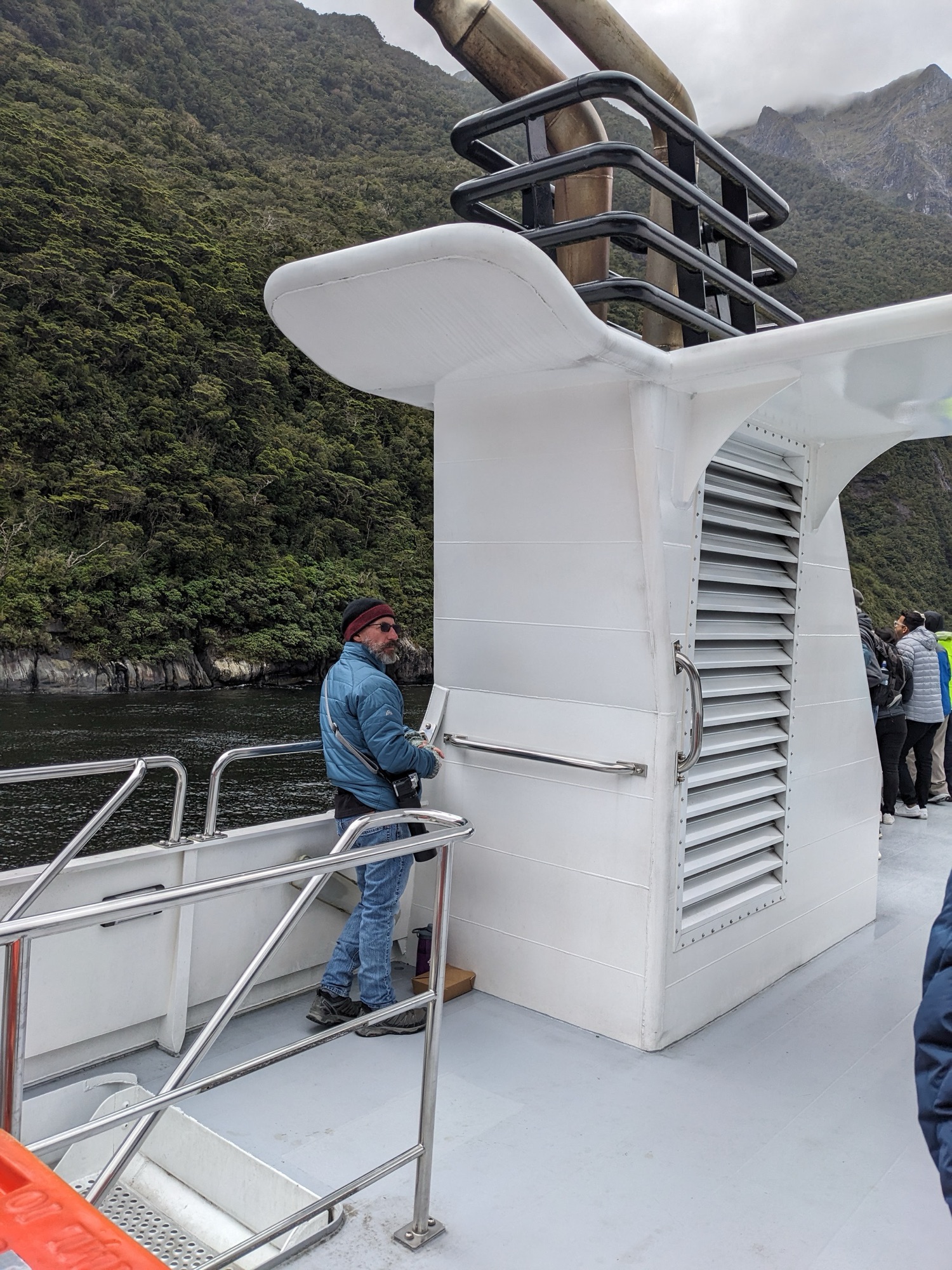
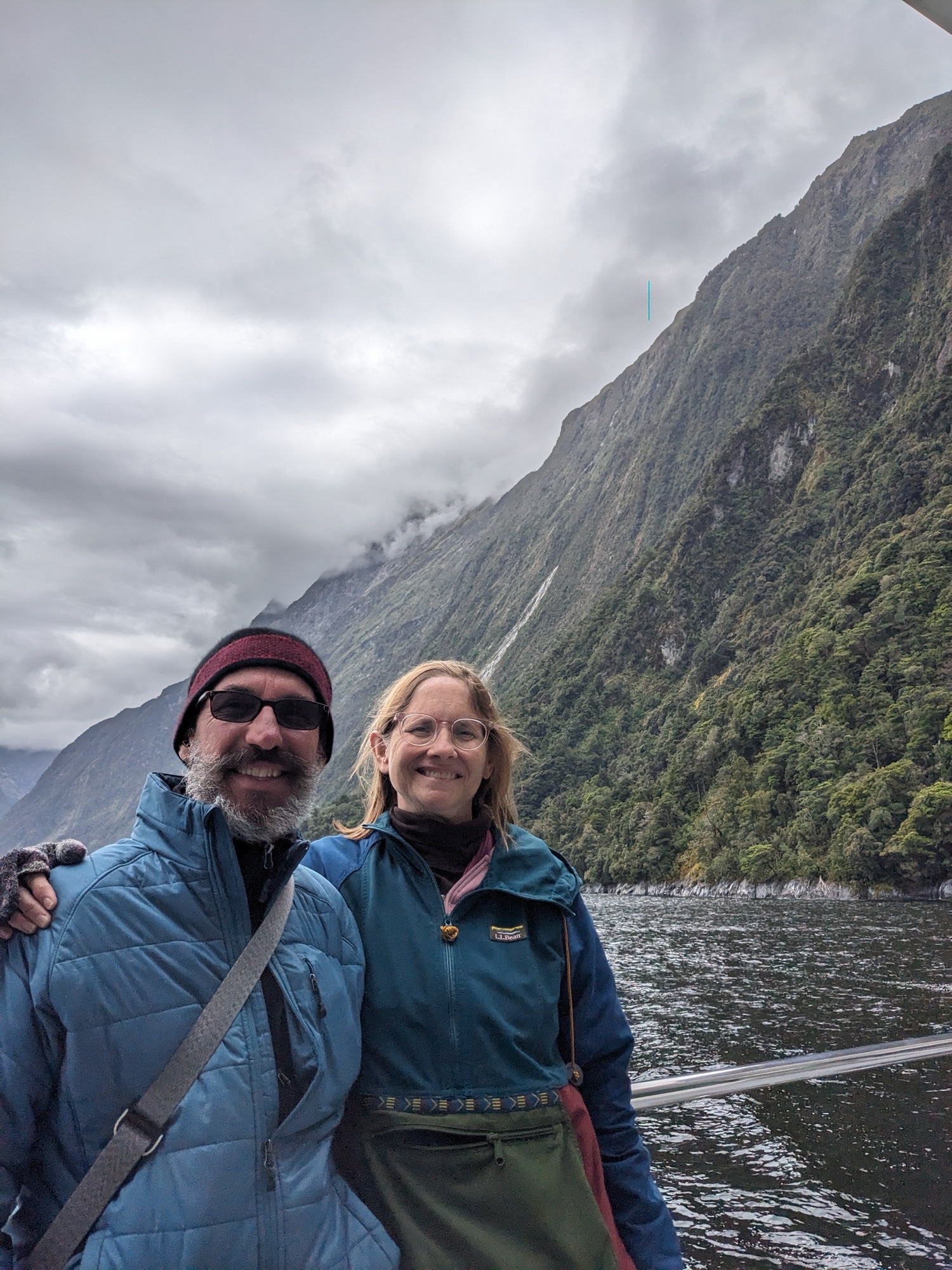
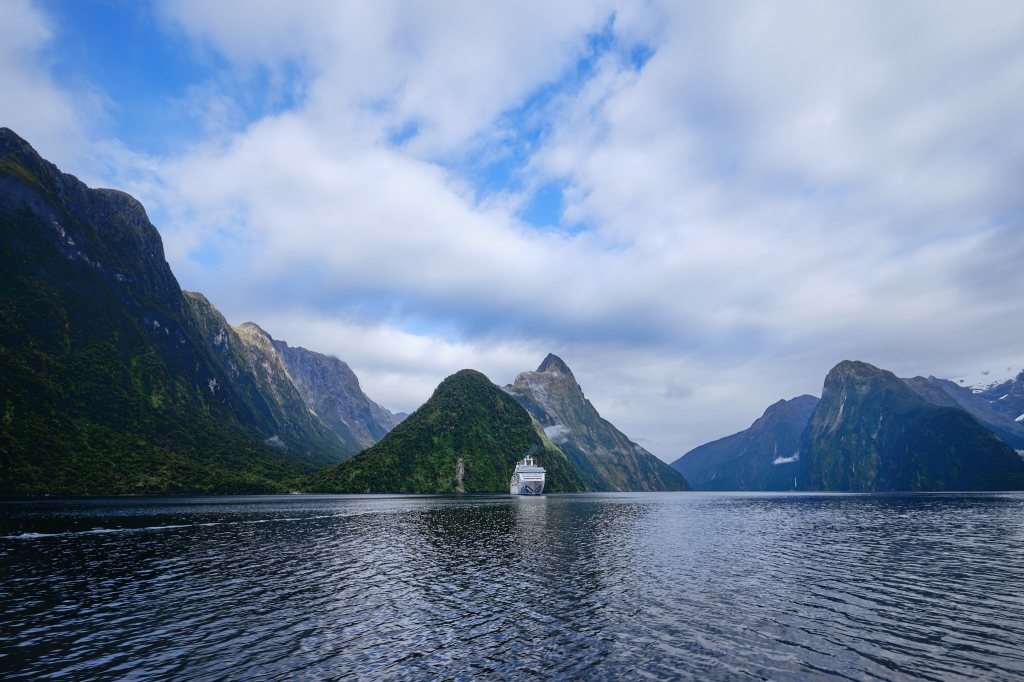
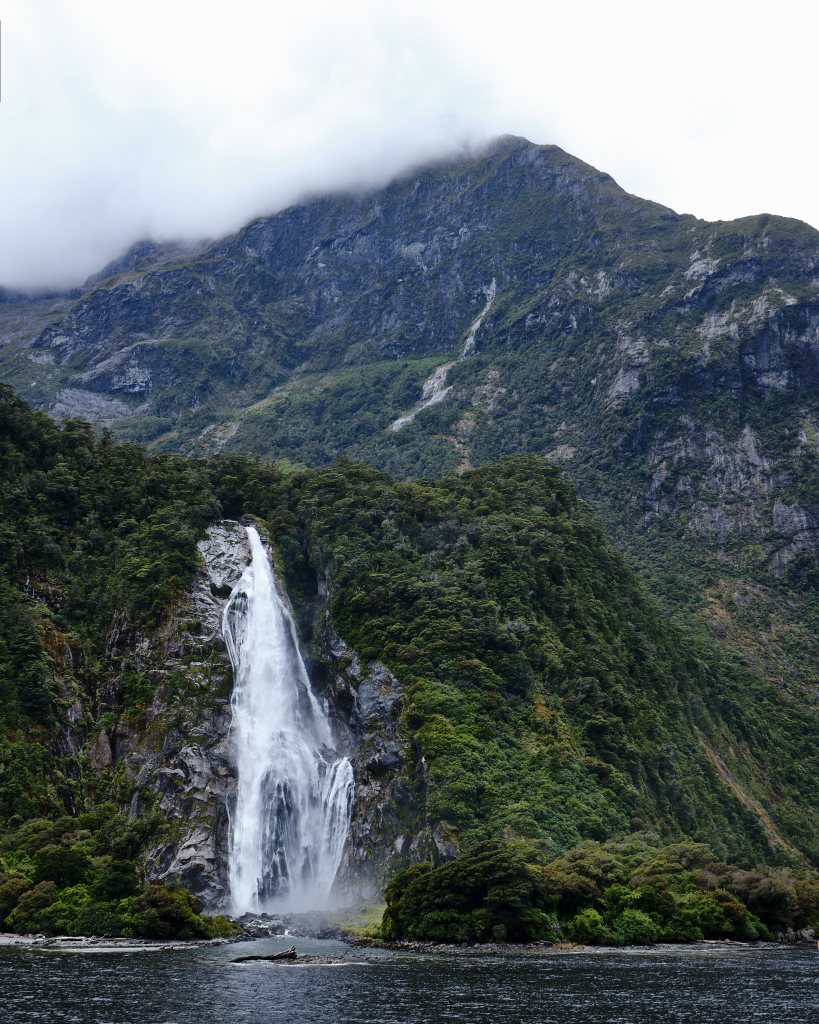
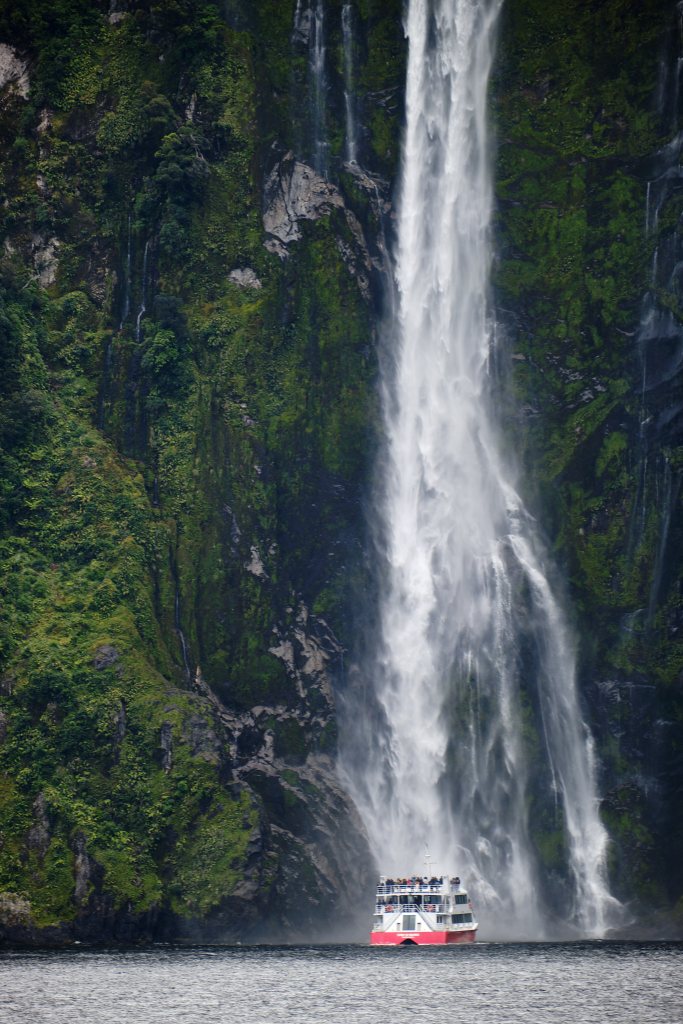
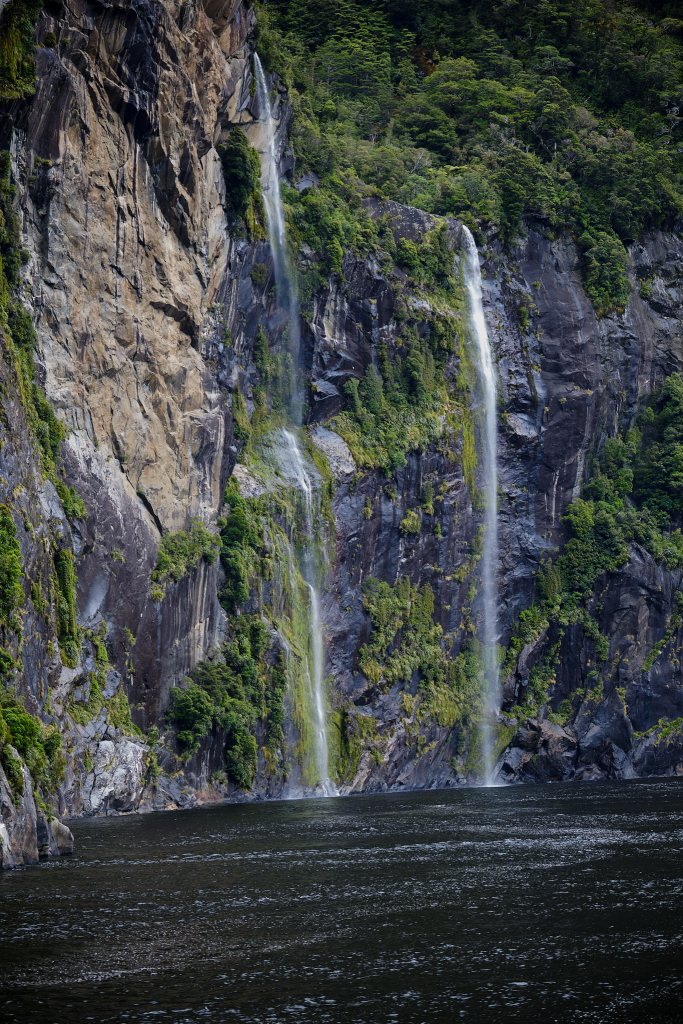
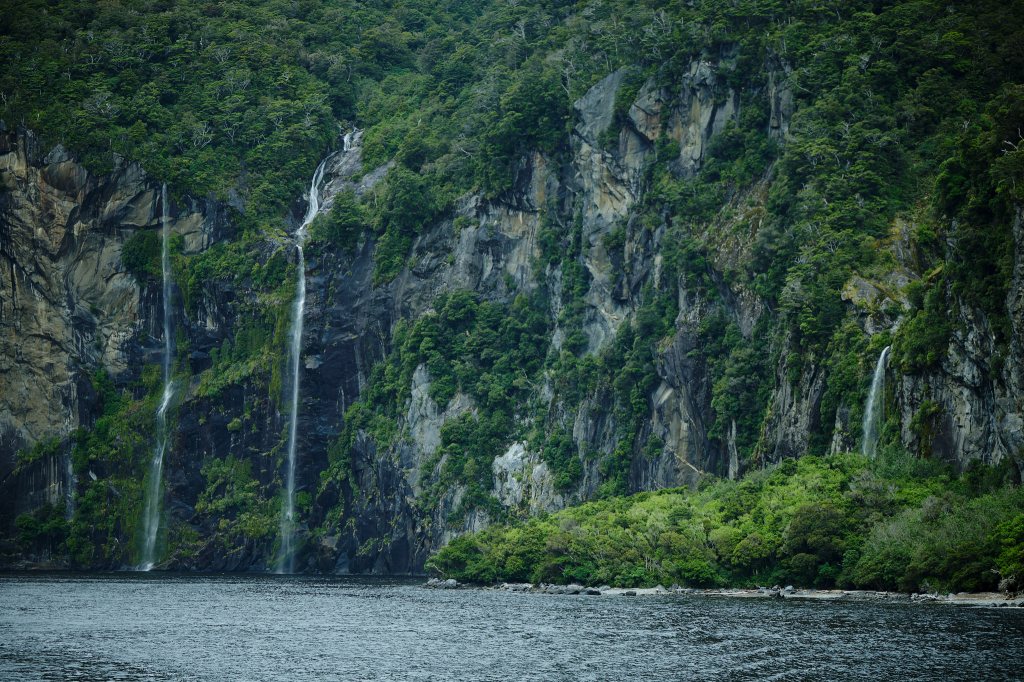
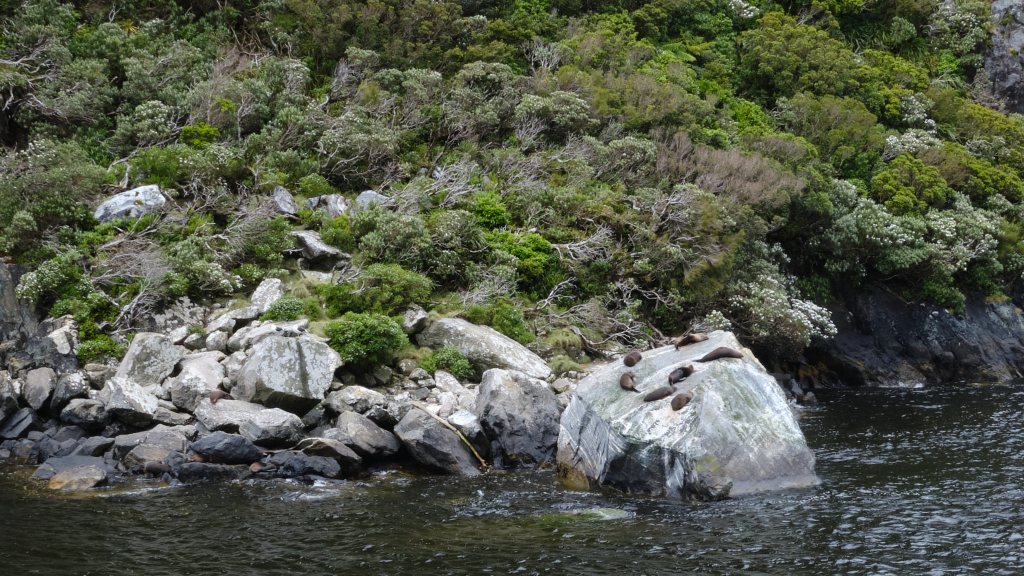
Back on a ship to the docks. A quick walk to Miranda for a quicker lunch break and onto a larger ship for a cruise. This one took us all around the sound. I found a warm spot on deck and Mike and I just stood there. We watched everything pass by us. Waterfalls thin and wide, short and massive and many that streamed down from impossible heights. The spray of the largest fall washed my face. A family of seals napped on some rocks. The many greens in the moss and trees and ferns revealed rock of white, deep brown, gray and jade green up mountains topped with jagged peaks. Mike spotted a vein of pounamu, precious green stone. I strained my neck to see it all!
The sound opened to the ocean, wide and windy and the ship turned back. I am glad we had such an early kayak paddle. The sound was so much quieter than when we returned from the cruise to a visitors center filled with people. Helicopters and sea planes buzzed in the air. Piopiotani was much nicer when quiet and lonely.
And apparently the goddess Hine-tu-te-po who fell in love with the god who carved this land with a hatchet liked it lonely too. She stayed with him but created the te name, sandflies, so that humans would not stay there in Piopiotani, for long. It was a good move.
Back to the lodge to do some writing my phone came alive with text messages at 6:05pm. It was my cousins sharing greetings of Happy New Year. It was midnight in the Eastern United States of course. Emi and Ben texted too. I love my family.
Made a dinner of smoked salmon and two minute noodles. (Something that will always be in repertoire from now on!) and chatted with Chelsea and Rhys. They were on the 8:30pm nature walk with us. Yay!
Our guide was Henrique, a Brazilian who also worked reception at the lodge. He had a true passion for the nature and mythology of this place. He showed us the “Shoelace tree”, the young leaves of which could replace your torn shoelace in the wild (apparently he does a lot for climbing in this area. I can believe he’s tried those laces). The tree looks quite different when it grows tall. I asked how the trees can grow if there is no soil. There is a cycle, he said. Every so often there is a tree avalanche. The rock becomes bare. Red and yellow lichens grow there. Mosses take root on top of them and grow up to foot thick. Plants and trees then take root, knitting and weaving their roots altogether until the trees are old and avalanche again. Fascinating!
Henrique told us of the poor extinct birds, who had evolved with only each other for predators so they stood still at any sign of danger. The mammals that came with humans, mostly westerners, were no match for them.
He used his voice to make the call of the female kiwi bird. Never look for them, he said. We would never find them and only get lost. And, animatedly, he told us stories. Thanks Henrique. You showed us the true Piopiotahi.
Marianna and Juan joined the four of us in the common room and we talked and ate until quite late. They had all gone on hikes and they shared their very different experiences to our own. Maybe next time that’s what we’ll do (yes, I am starting to think there might just be a next time).
We exchanged contact information and hoped to meet up the next night, as we would all be in Queenstown. Hugs all around and to bed.
Much later Mike and I were awoken by a strange whistle and a coughing gurgle. It was the male and female kiwi birds calling to each other.
What a sound.



Leave a Reply