21 December 2023
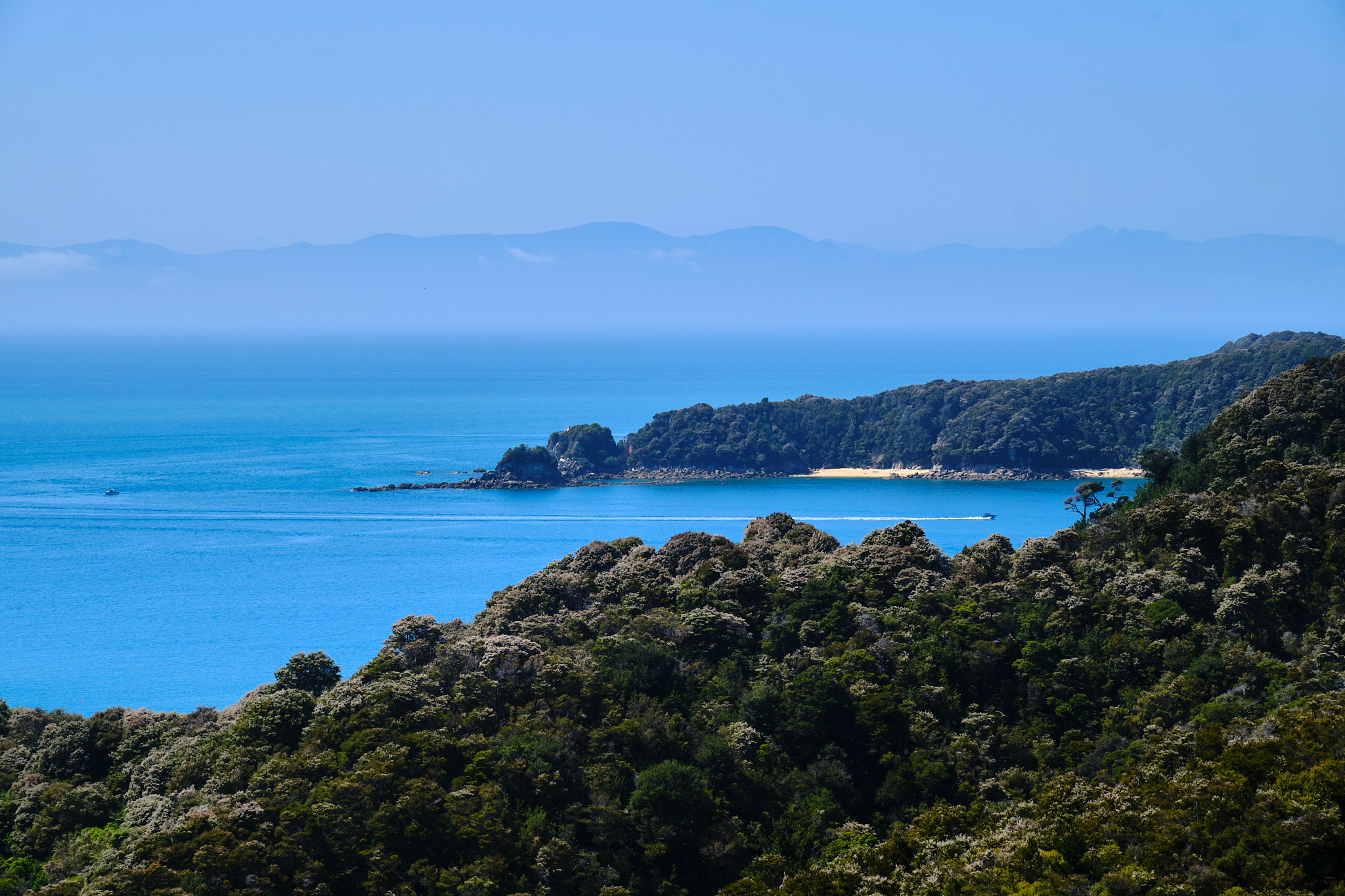
Although the smallest national park in New Zealand, Able Tasman is certainly one of the most popular. With many kilometers of trails through the rain forest and several pristine beaches, there is much to see and do. And we crammed much of it into one day.
Camping at the Marahua Holiday Park was a smart move. An office across the street handles shopping, camping, information and tours. We had pre-booked a combination 8K hike through the park on a trail and a guided kayak tour returning on the sea. But getting to the start point of the whole thing was half the fun.
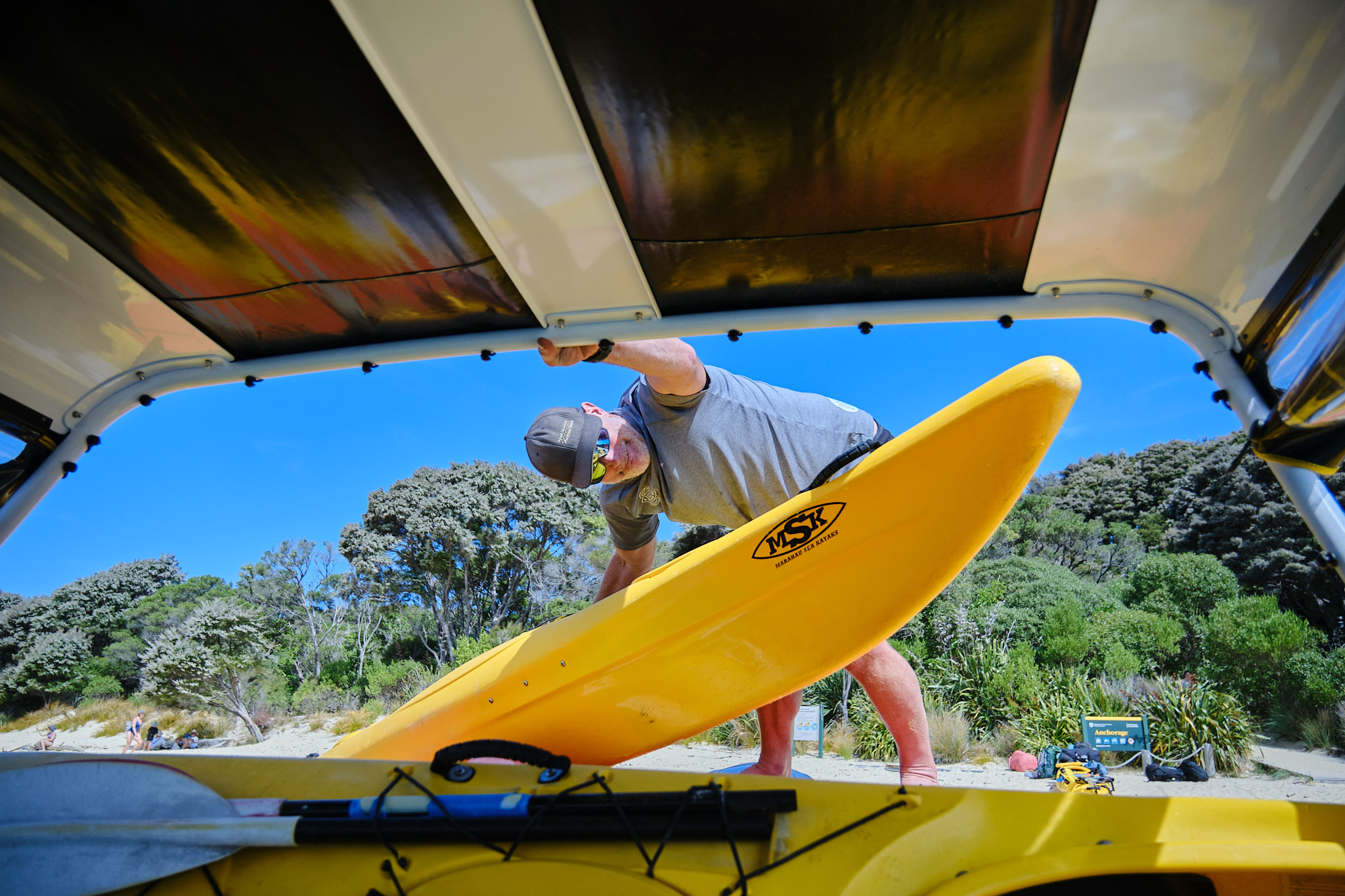
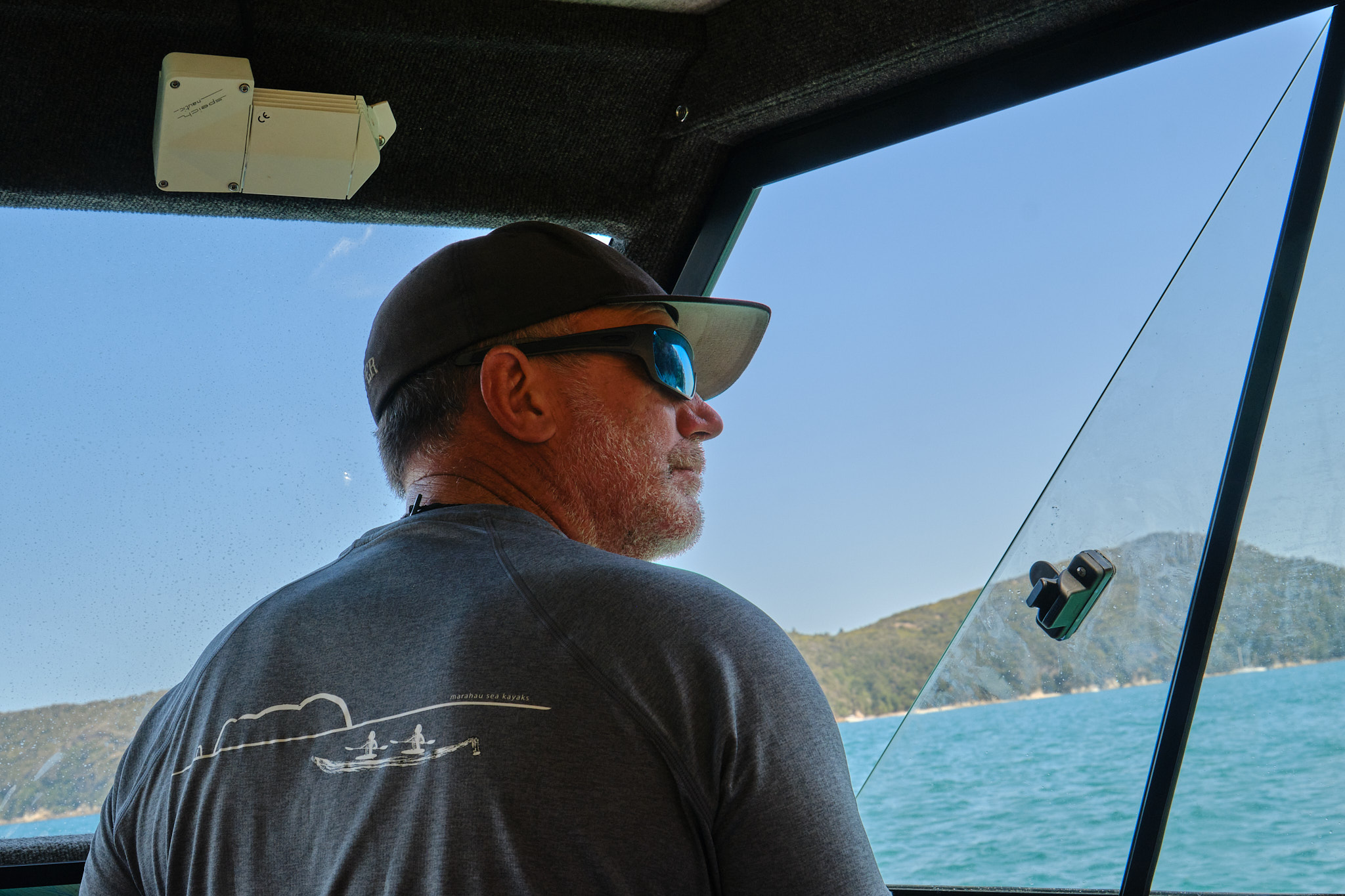
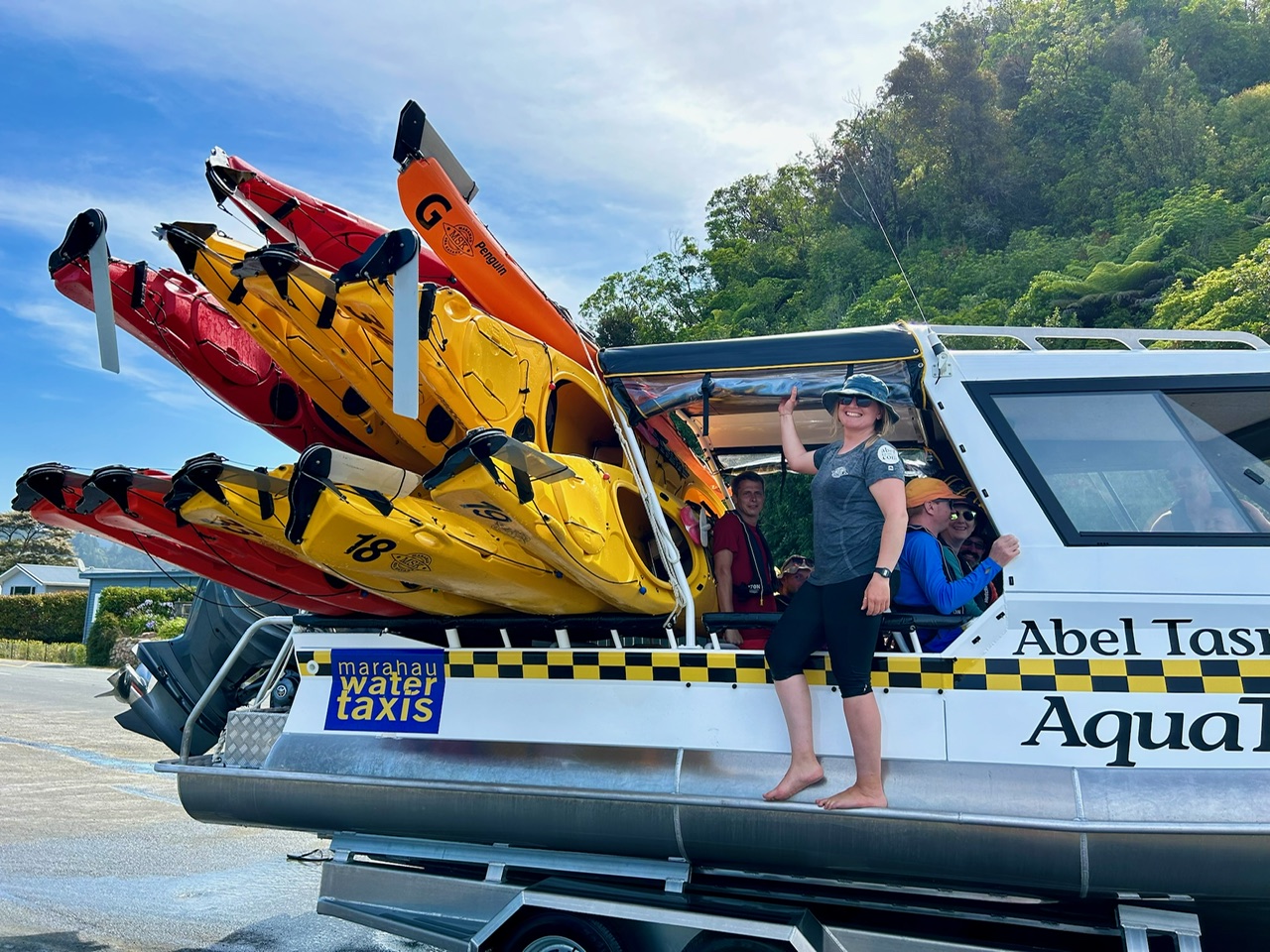
Meeting at the office, a dozen passengers were loaded onto a motor boat/water taxi already on a trailer attached to a tractor. A quick safety talk from the savvy skipper as we donned our life jackets and we were off. Before we knew it the tractor was driving onto the wide beach and into the shallow water. In a moment the boat was released and we were on our way.
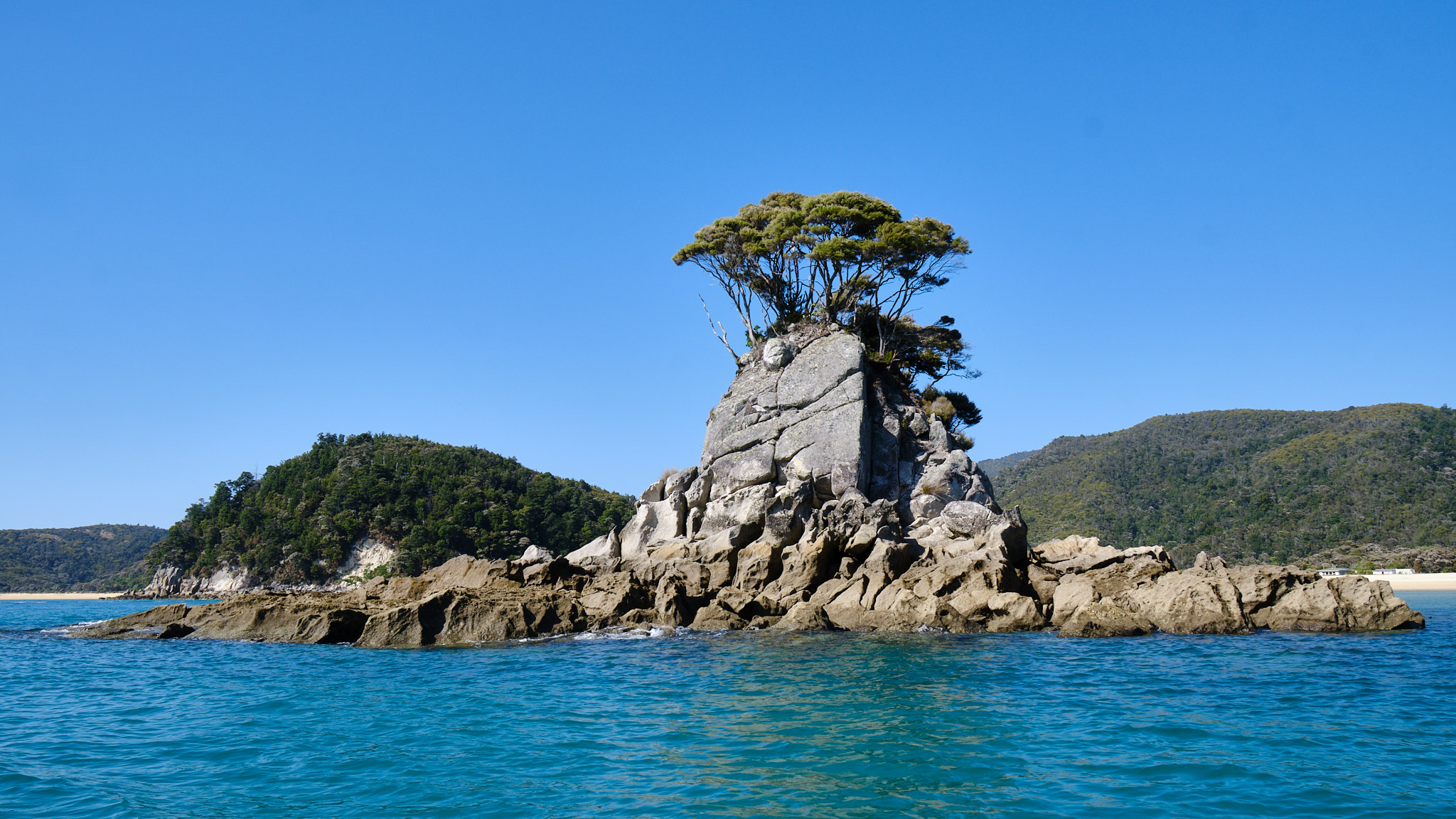
The skipper sped south, (the opposite direction of our destination), to give us a real treat: the site of the famous Split Apple Rock. This giant ancient formation was formed out of a boulder of split granite. At low tide it stands like a statue surrounded by the light blue waters of The Tasman Bay.
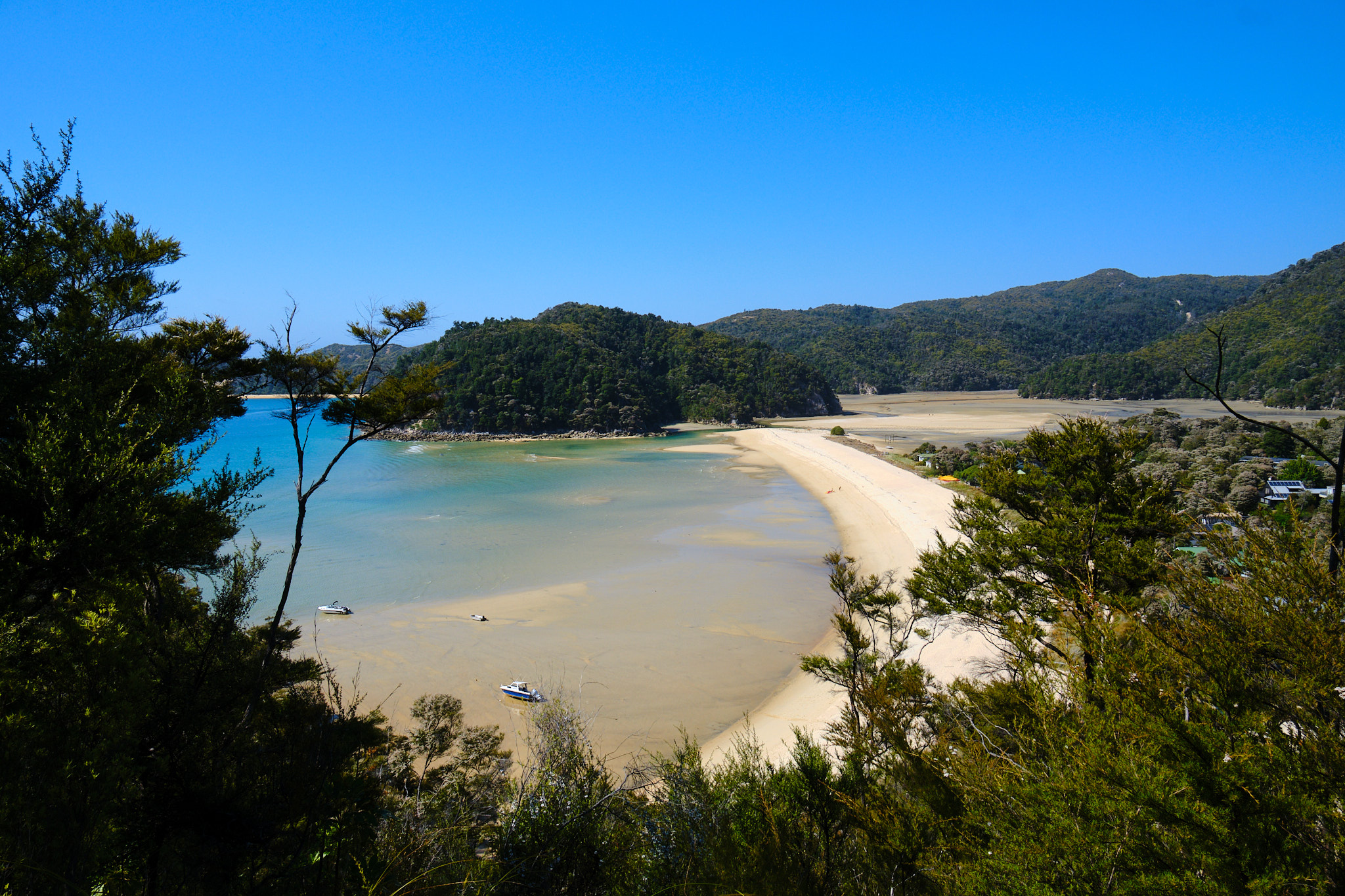
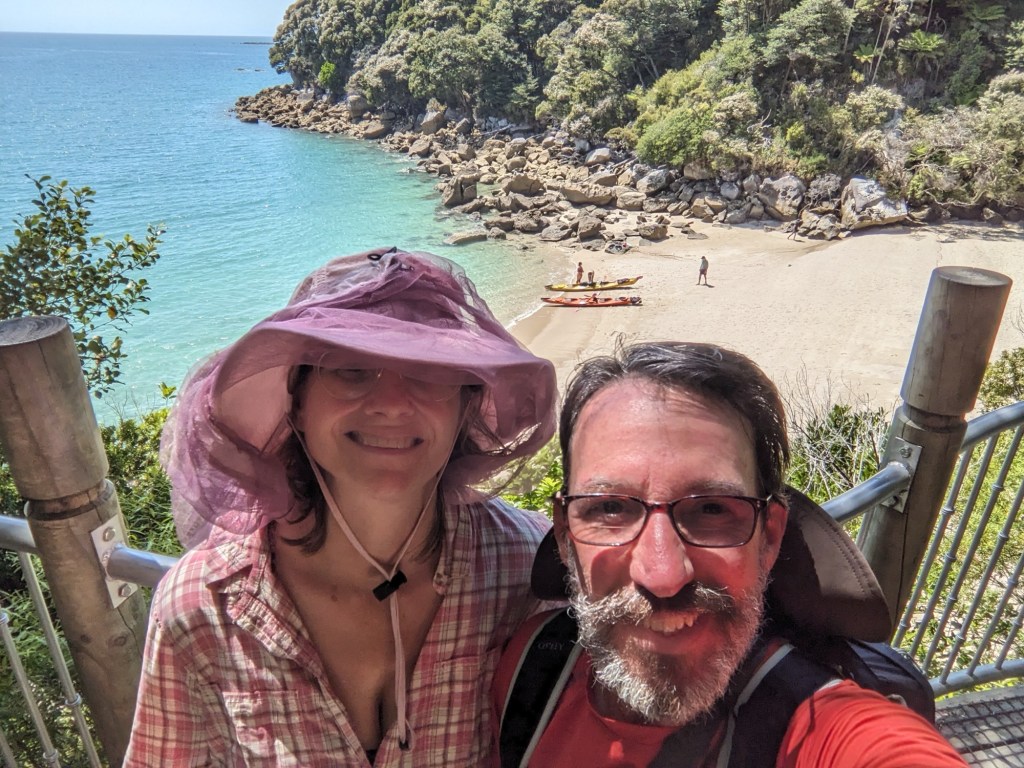
Speeding off again we held onto our hats for the exhilarating ride to Torrent Bay. The beach there was where our tramp began. Since there are no docks on these particular beaches, the skipper deftly pulled down a gang plank. With bare feet and rolled up pants, we walked the plank into cool water that went up past our knees. But we knew all would be well when a sweet dog named Girl ran up to greet each one of us before returning to her mistress in the shade. Apparently she runs out to meet every water taxi! And they run all day!
Mike and I were to follow the trail north, 7.8 kilometers to Bark Bay Beach. We had a strict time table of 2 1/2 hours to meet our kayaks and guide there at 12:30. It didn’t seem like an issue until we realized how spectacular the flora, fauna and views would be.
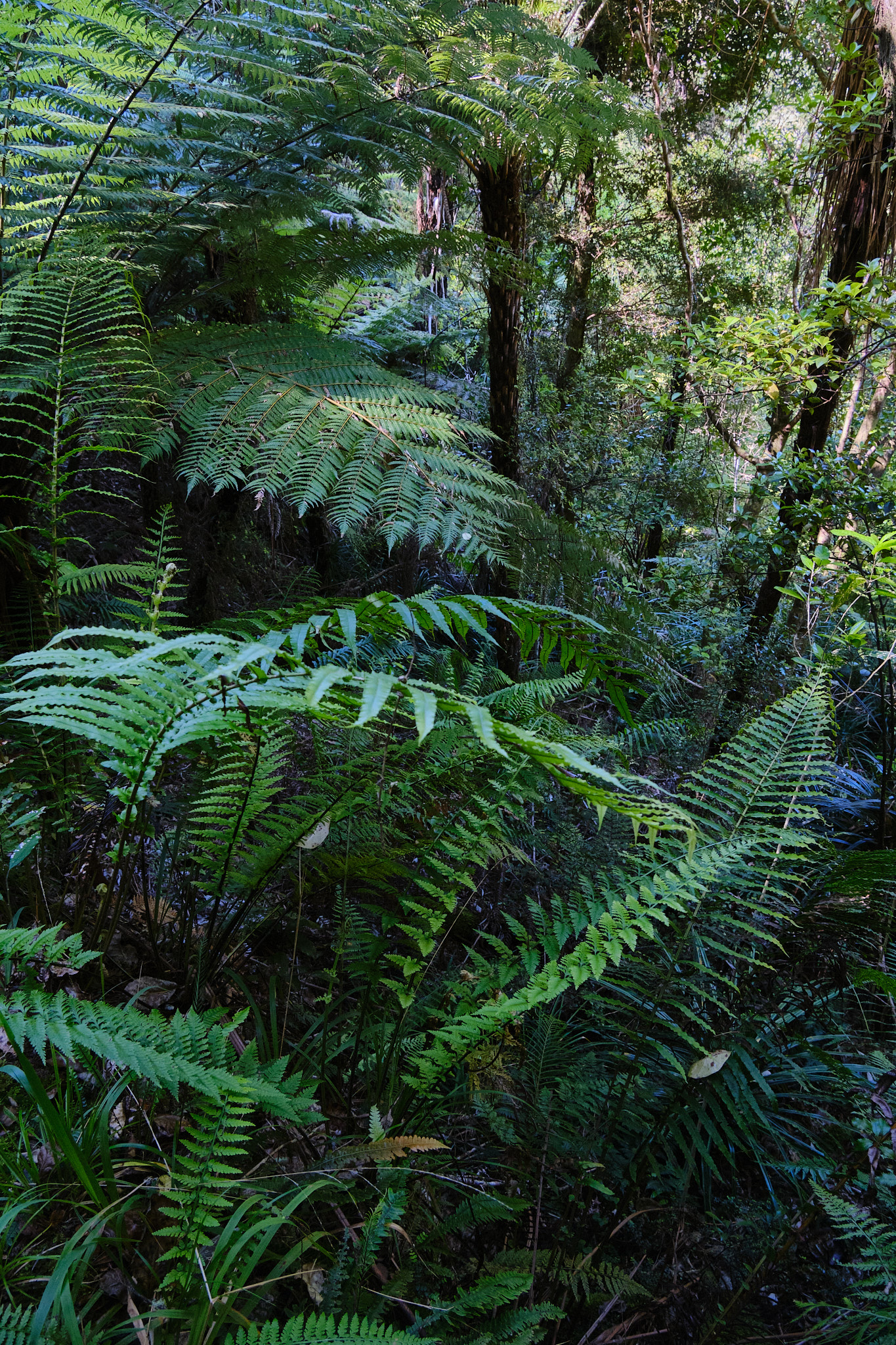
We saw tui birds and the flightless, friendly weka. Huge ferns and palms and trees with leaves and flowers tiny and big. Water murmured down streams and waterfalls seen and unseen. The scent was floral, fresh, steamy, green. At one point I felt I was in The Rainforest Cafe, or a tropical room in a zoo. But again this was all real! I guess those businesses got it right after all.
The only unnerving part of this hike for me was the constant humming. The Manuka trees were full of small white flowers and the bees were working hard! These bees make the unique and coveted Manuka Honey, a New Zealand specialty that is purported to have healing properties. Insect repellent, rubber bands on all my cuffs and a hat with bug netting, kept my worries to a minimum and myself un-stung.
At the approach to a swinging bridge was a type of sign we have seen often. Caution signs in NZ are simple: a huge, bold exclamation point over a few words that describe that to be cautious about. On roads it may be “falling rocks” or “low bridge”. On this bridge it was “Maximum 10 Persons”. As you all are aware, I am a big fan of exclamation points and use them often. So I love this idea! (Case in point!)
There were plenty of people on the trail heading in both directions. A stunning young Lithuanian woman named Rosetta was taking 5 days to do the entire Able Tasman Trail alone. It was a pleasure just to be in her presence. From all accounts of people heading south we were behind schedule, so reluctantly we picked up the pace and made it to the kayaks just in time! Except it was the wrong beach and the wrong kayaks. Ours were 10 minutes more up the track.
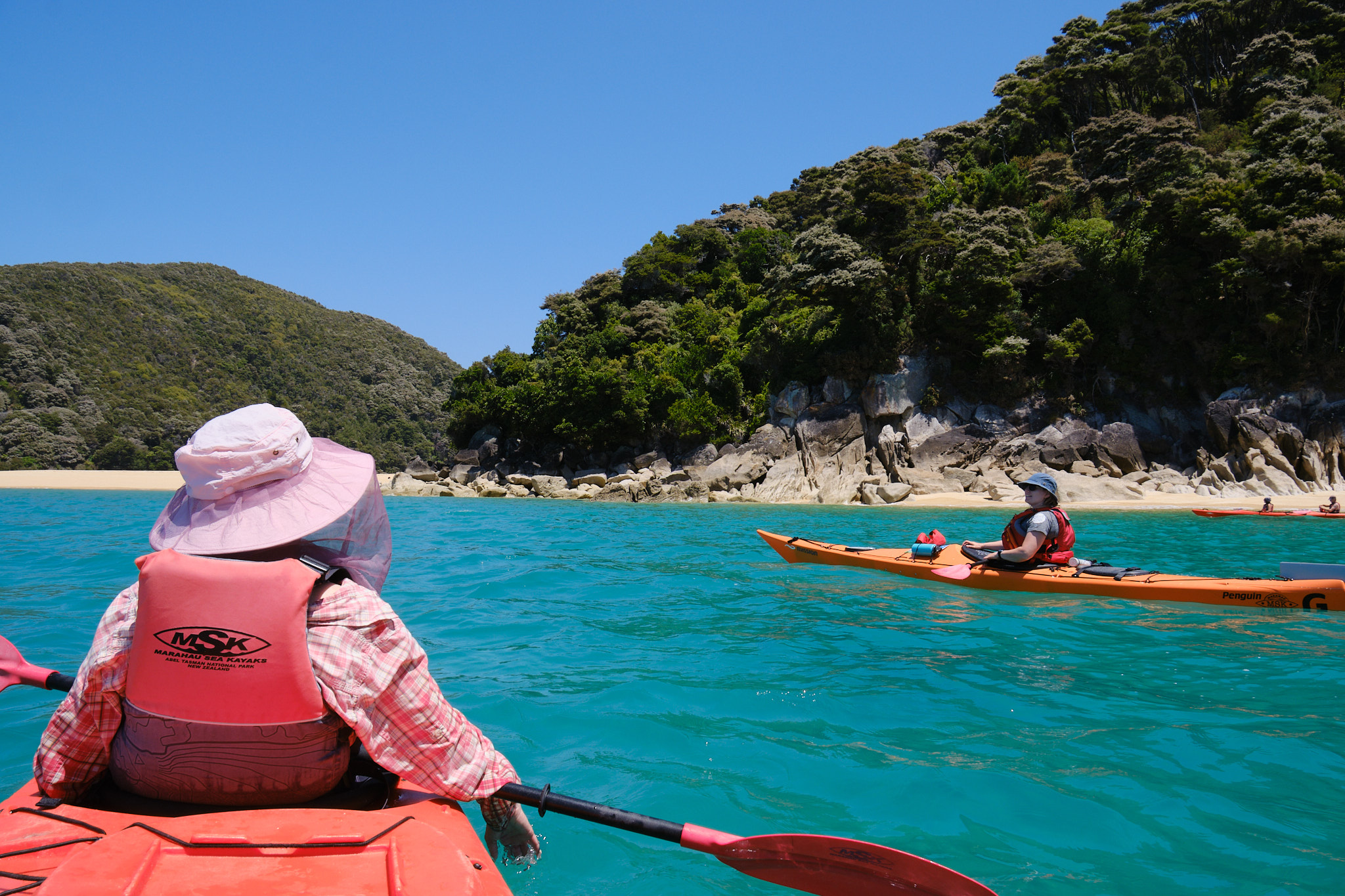
Our welcoming guide greeted us with a phrase were hear frequently from Kiwis “No worries!”. After a quick lunch, and an introduction to our kayaking companions Emilie and Jonas, we were shown to our double kayak and kitted out. First we stowed our backpack in the center water proof compartment, then tucked our water bottles into the bands on top of the kayak. Next Mike and I each put on black waterproof skirts. These skirts attached to our kayak seats to keep out the water. Over the skirts went sturdy life jackets. After a nerve-inducing safety briefing on what to do if our kayak capsized, we set off through the breaking waves to follow our guide and companions.
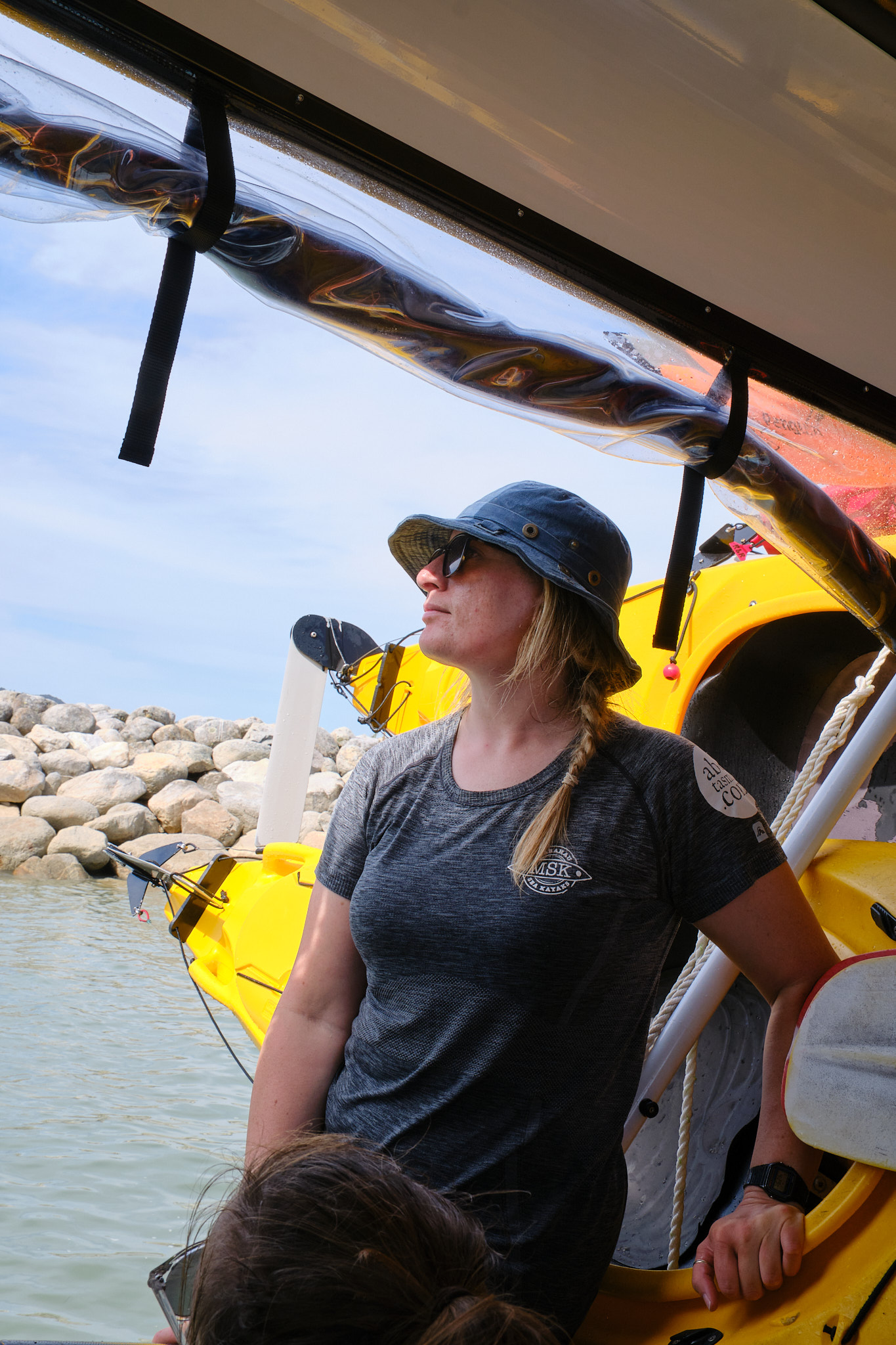
Lauren was a real pro and kept us calm and focused as we became accustomed to our little craft. Mike steered the rudder using foot pedals and I helped provide power by padding. By the time we rounded the first rocky bend we were comfortable enough to really enjoy the experience.
The waters were cool but not cold as the shades of blue changed and Lauren guided us over and around the boulders beside the shore line. We asked lots of questions and Lauren told us about the seals relaxing on the rocks, a mother seagull and her chicks and the shags (what we call cormorants). She pointed out the Manuka trees with their bark falling off in long strips, and the humming bees. The most interesting story was about Able Tasman himself.
It is very surprising to us that so much in this part of the world, the park, the sea, even the large island territory south of Australia are named after such a failure. The Dutch sea captain never established trade, found riches or even spent much time on the lands that The Dutch East India Company hired him to explore in the mid 1600s.
According to the story, when Tasman and his two ships approached the very coast where we were kayaking the resident Māori tribe blew on a conch shell. In their communication system silence from the visitors would indicate peaceful intentions. A call back would indicate hostile intentions. Of course for Europeans the opposite was true. Able Tasman ordered his bugler to call back prompting a score of Māori warriors to launch their waka canoes and attack. Four Dutch sailors were killed. The expedition left the area, never setting foot on it. The rest of this man’s two expeditions were marked by rough seas and difficult terrain. His company politely refused a third journey. Nova Zeelandia wasn’t seen by westerners for another hundred years when Captain Cook sailed in. But that’s another history lesson.
Our own sea adventure was going splendidly. We were able to keep up with our young German companions and even had a time to take a little swim. After almost 3 hours we were back to Torrent Bay, the starting point of our hike earlier in the day. Here we met another grizzled skipper who, with the assistance of Lauren, had the task of loading the four of us from the kayaking tour, as well as 8 other passengers and 12 kayaks onto the water taxi for the final return trip.
The beach was littered with sun-weary tourists who just wanted to get back to their camps and a cool shower. Upon the approach of this skipper and his taxi they all crowded in on him. But he was not their ride. We overheard him exclaim to us “One of these days I’m gonna a get a t-shirt saying I am not the ****** 4 o’clock taxi!”. And then go on that it was well past time for his Thursday afternoon beer. Despite this he either wanted to have some fun OR he really wanted that beer because he raced another taxi to another beach where he and Lauren loaded up more kayaks.
The final trip to our beach camp was fast!! I felt like I was in the old Benihana Grand Prix race off the Jersey Shore. It was really fun! It was the skipper’s son who drove the tractor that dragged us out of the water and onto land. The poor kid was admonished by his dad for not wearing sunscreen (how did he know?) Still, an impressive operation all around.
With gushes of appreciation we bade farewell to the wonderful Lauren and walked with Emilie and Jonas back to camp. A warm shower of just 4 minutes was all that the restrictions allowed, but it was just perfect all the same.
The stars didn’t come out until past 10pm. It was midsummer night. And quite a dream.






 Kiwis and Fairy Bread
Leave a comment